• Skip to main content
  • Skip to primary sidebar
  • News Stories
  • Africa
  • America
  • Asia
  • Europe
  • Global
  • Travel
  • Technology
  • Sports
    • Football
  • Featured
    • ARTICLES

Global Reporters

Bringing the world a bit closer to you

GR.News

Venezuela’s Earthquake Catastrophe Deepens: Over 2,000 Dead, Tens of Thousands Still Missing One Week On

2 July 2026 by GR.News Leave a Comment

The strongest seismic event to strike Venezuela in more than a century has left the nation confronting a humanitarian disaster of almost unfathomable proportions, with rescue operations shifting from hope to recovery.

LA GUAIRA, VENEZUELA — On a Tuesday evening six days after the worst earthquake in Venezuela’s recorded history, a three-year-old boy named Klieber Morán was pulled alive from under the ruins of a collapsed building in the coastal state of La Guaira. The rescue — a rare miracle in a week dominated by grief — was broadcast to a stunned nation. But for the thousands of families still searching for their loved ones, the moment offered only the briefest reprieve from an unfolding catastrophe.

One week after twin earthquakes ripped through northwestern Venezuela on the evening of June 24, 2026, the scale of destruction is becoming clearer — and more devastating — with each passing hour.

Venezuela’s rare double earthquakes struck within seconds of each other, measuring a magnitude 7.2 and 7.5. As of late last week, the death toll had climbed to 2,295, with more than 11,200 people injured, according to Jorge Rodríguez, Venezuela’s National Assembly president. Yet tens of thousands more remain unaccounted for.

A Geological Event Unlike Any Other in Living Memory

The twin events arrived only 39 seconds apart, with moment magnitudes of 7.2 and 7.5, and epicenters located within about 6.2 miles of one another. They represented a relatively uncommon form of seismic activity called a “doublet,” or “earthquake doublet,” in which two distinct earthquakes have nearly identical seismic waveforms, hypocenters, and moment magnitudes. Seismologists note that the earthquakes were the strongest to hit Venezuela since 1900.

Seismologists suggest that the first event likely activated the second, with the rattling caused by the rupture along the first fault increasing the stress along the second, which was located closer to the surface, until the rocks gave way. The Boconó fault system is a complex network of faults running southwest to northeast across northwestern Venezuela — where it converges with the east-west–oriented San Sebastián fault system, together forming a strike-slip boundary between the Caribbean and South American tectonic plates.

The epicenters were located in Yaracuy state, roughly 100 miles west of Caracas, and the shaking was felt across virtually the entire country and into neighboring Colombia, Trinidad, and parts of Brazil. The coastal state of La Guaira, home to Venezuela’s main international airport and a dense concentration of high-rise residential buildings, bore the worst of the destruction.

Officials surveying hard-hit areas, which included Caracas and La Guaira state, reported that more than 250 structures had been damaged or destroyed across the region, in many cases trapping occupants and crushing nearby vehicles and infrastructure.

The Scale of Human Suffering

In addition to casualties, the sheer number of people left homeless is staggering. A satellite data analysis estimated that 58,870 buildings were likely damaged or destroyed by the earthquakes. Up to 6.8 million people could be affected by the disaster, requiring shelter, water, sanitation, healthcare, and other relief items, according to the U.N.’s International Organisation for Migration.

An estimated 680,000 children alone need humanitarian assistance across the six states affected by the earthquakes. Communities remain at risk from continuing aftershocks, which have numbered more than 600 since the initial quakes.

UNICEF has estimated that $52 million is urgently required to respond to the earthquake emergency.

Venezuela’s healthcare system, which was already struggling because of years of underinvestment, is now at breaking point. The majority of people in the hardest-hit areas are “without food, drinking water, shelter, or access to basic healthcare,” according to Karol Bassim, senior program manager with the International Medical Corps’ emergency response unit. “Hospitals are overwhelmed. Some are operating far beyond capacity. Health workers are definitely exhausted,” Bassim told NPR.

In the streets of La Guaira and the coastal town of Caraballeda, the air has taken on the heavy smell of decay. Buildings lean like sinking ships. High-rises still standing have lost entire facades, exposing interiors where life appears frozen in time — children’s bedrooms with toys still on shelves, kitchens mid-meal. In many structures, the floors collapsed in on themselves in the phenomenon engineers call “pancaking.”

Government Response Under Fire

Public anger has grown at the response from Venezuela’s U.S.-backed government, which critics say has been slow and inadequate. Many people in the disaster zones have had to fend for themselves to recover the dead. Residents are digging with their own hands to search for loved ones in the rubble.

Accounts from the field paint a picture of bureaucratic obstruction at the worst possible time.

Cargo planes carrying emergency aid began landing in Venezuela only after the main airport in the capital, Caracas, partially reopened to relief flights.

In the meantime, soldiers and police set up roadblocks demanding government permits from doctors and rescue workers trying to reach disaster zones.

One resident, Rosalia Bustamante, lost several friends when a 12-story building collapsed. “There were people in the ruins responding when we called out to them,” she said. “But now, they are dead.” Construction worker Julio Meléndez described a two-day ordeal simply to bring a jackhammer into a disaster zone because police demanded both a permit and a sales receipt for the equipment. “The only thing the authorities do is get in the way,” he said.

The disaster represents a major test for the government of interim President Delcy Rodríguez, who assumed the presidency after the U.S. military’s abduction of President Nicolás Maduro earlier this year. Washington has sent rescue teams while pledging $150 million to the earthquake response.

International Rescue Effort

The United Nations humanitarian affairs agency reported that a total of 44 international urban search and rescue teams, comprising 2,245 specialists and 140 search dogs, had been deployed to Venezuela, with more teams, including rescuers from Israel, arriving throughout the week.

Among those arriving is the Brigada Internacional de Rescate Topos Azteca, one of Mexico’s best-known civilian search-and-rescue organizations, founded after the devastating 1985 Mexico City earthquake. The nonprofit brigade has earned an international reputation for deploying to major disasters. “The hardest part is telling someone that their loved one has died,” said volunteer Germán Bello.

UNICEF flew in an initial 47-tonne shipment of humanitarian supplies, in addition to a regional shipment from Panama that arrived earlier in the week. Combined, those supplies will support more than 100,000 children and families over three months, including emergency health kits, supplies for safe births, newborn care, and disease prevention.

The European Union, UK, Brazil, Chile, China, India, Japan, and Turkey have also pledged support or sent emergency crews. The U.N. is now warning explicitly about the risk of infectious disease outbreaks spreading through overcrowded, unsanitary conditions in the disaster zones.

A Country Already on Its Knees

Venezuela was already among South America’s most fragile states before the quakes struck. More than 7 million Venezuelans fled abroad during the political and economic crises of the past decade, depleting the country of a generation of skilled workers — including doctors, engineers, and public administrators — exactly the people needed most in a disaster of this magnitude.

The death toll “will unavoidably and sadly keep on growing as the search-and-rescue operation continues, and as we are able to detail further assessment of the impacts of the quakes,” said Gianluca Rampolla, the U.N. humanitarian coordinator in Venezuela.

As rescue operations shift from finding the living to recovering the dead, the world’s attention must not waver. The coming weeks will determine whether Venezuela’s people — tested by a decade of political turmoil, economic collapse, and now nature’s most violent intervention — will receive the help they so desperately need.

Filed Under: Natural Disasters, News Stories Tagged With: Caribbean, Delcy Rodriguez, earthquake 2026, earthquake doublet, humanitarian crisis, La Guaira, search and rescue, UNICEF, Venezuela, Venezuela earthquake

THE AGENTIC AGE: ANTHROPIC UNVEILS CLAUDE SONNET 5 AS US GOVERNMENT LIFTS RESTRICTIONS ON FRONTIER MODEL FABLE 5

1 July 2026 by GR.News Leave a Comment

SPECIAL TECH REPORT  |  WASHINGTON & SAN FRANCISCO  |  JULY 1, 2026

SAN FRANCISCO, CA — In a rapid-fire sequence of announcements that highlights the breakneck speed and escalating geopolitical stakes of the artificial intelligence race, Anthropic has officially deployed Claude Sonnet 5, its most autonomous “agentic” model to date. The surprise launch arrives on the immediate heels of a high-stakes resolution to an 18-day global freeze of Anthropic’s ultra-powerful frontier model, Claude Fable 5, following an unprecedented national security intervention by the United States government. Taken together, the double milestone marks a profound shift in the industry: AI competition is no longer just about which chatbot sounds the smartest, but which system can autonomously execute complex operations—and how governments intend to police them.

Claude Sonnet 5: The Era of AI Agents Arrives

Released on June 30, 2026, Claude Sonnet 5 has immediately become the default operational framework across all Anthropic tiers, including Free and Pro plans. Positioned as a mid-range, highly cost-effective model, Sonnet 5 represents a paradigm shift toward “agentic” workflow execution. Rather than simply acting as a passive conversational partner, Sonnet 5 is engineered to operate as an autonomous agent: it can construct multi-stage plans, navigate live technical environments, use advanced tools like browsers and command-line terminals, and complete long-running multi-step processes with minimal human oversight.

According to technical benchmarks released by Anthropic, Sonnet 5 demonstrates major improvements in follow-through and grounding compared to its predecessor, Sonnet 4.6. On the rigorous Terminal-bench 2.1 evaluation—which measures an AI’s ability to execute engineering tasks via an active command line—Sonnet 5 achieved an extraordinary score of 80.5%, a substantial leap from Sonnet 4.6’s 67%. The model achieves near-Opus level intelligence at a fraction of the cost, making it highly competitive for enterprises seeking to automate software development, handle complex technical dependency chains, and synthesize vast, unstructured data repositories into actionable business intelligence.

BENCHMARK HIGHLIGHT: CLAUDE SONNET 5
Claude Sonnet 5 sets a new standard for mid-tier AI efficiency and autonomy, scoring 80.5% in Agentic Coding on Terminal-bench 2.1 (up from 67% in Sonnet 4.6). Available at an introductory price of $2 per million input tokens and $10 per million output tokens through August 31, 2026, it accelerates the industry-wide transition into autonomous agent operations.


The Fable 5 Crisis: Emergency Safeguards and the Global Freeze

While Sonnet 5 represents Anthropic’s bid for scaling everyday agent workflows, its release took place against the backdrop of severe regulatory turbulence involving its flagship frontier model, Claude Fable 5. First launched on June 9, 2026, as part of Anthropic’s ultra-capable “Mythos-class” tier, Fable 5 stunned the AI community by scoring an unprecedented 91 out of 100 on senior-engineer programming benchmarks (vastly outpacing Opus 4.8’s 63 and GPT-5.5’s 62). Early corporate adopters, including Stripe, reported that Fable 5 could compress months of codebase-wide architecture migrations into a single day.

However, the model’s immense power quickly triggered national security alarms. On June 12, just three days after its debut, the U.S. Department of Commerce imposed emergency export controls on Fable 5 and Mythos 5. The sudden intervention stemmed from cybersecurity vulnerabilities discovered during cloud red-teaming. Analysts at Amazon revealed that Fable 5’s robust internal cyber-safeguards—designed to prevent the model from discovering or writing offensive software exploits—could be entirely bypassed or ‘jailbroken’ through simple linguistic rephrasing. By reframing a malicious request into an ordinary coding task (such as a basic prompt like ‘fix this code’), the model could inadvertently act as an autonomous offensive cyber-weapon, a risk previously highlighted by Anthropic CEO Dario Amodei.

Faced with federal directives that applied broadly to foreign nationals both inside and outside the United States, and lacking the infrastructure to verify the location and nationality of global users in real time, Anthropic took the drastic step of disabling access to Fable 5 and Mythos 5 worldwide. This unprecedented 18-day freeze cut off paying corporate clients and developers across the globe, throwing projects into disarray and igniting intense debate over government overreach, probabilistic AI safety, and the vulnerability of commercial AI platforms to sudden regulatory shutdowns.

The Resolution: Restoring Access and Authoring the Frontier Rulebook

The regulatory gridlock finally broke on June 30, 2026, when the Department of Commerce officially lifted the emergency export controls following extensive collaboration between Anthropic and federal agencies. Effective July 1, Anthropic has fully re-deployed Claude Fable 5 globally across the Claude Platform, Claude.ai, Claude Code, and Claude Cowork. To achieve this clearance, Anthropic implemented enhanced, real-time cyber safeguards designed to block dual-use malicious code exploration without compromising the model’s core programming performance. Crucially, the standard Mythos 5 model remains heavily restricted, accessible only to an elite roster of approved U.S. organizations under strict federal oversight.

TIMELINE OF THE 18-DAY REFRIGERATION
June 9: Fable 5 launches to critical acclaim.
June 12: US Commerce Dept issues emergency controls over jailbreak risks (‘fix this code’ prompt bypass).
June 12–30: Anthropic executes a global freeze of Fable 5 to comply with federal directives.
June 30: Controls lifted after intense red-teaming and safety patches; global restoration begins July 1.


In a formal statement, U.S. Commerce Secretary Howard Lutnick praised Anthropic’s active compliance, noting that the company worked hand-in-hand with federal officials to establish critical protocols and standards for frontier AI systems. Industry analysts view this resolution as a foundational precedent. As AI models transition from static chat systems into active digital agents, their security relies heavily on ‘words guarding words’—probabilistic safety guidelines that can be easily manipulated. By involving the Pentagon and the National Security Agency in pre-release vetting, Anthropic is effectively co-authoring the regulatory rulebook that the entire artificial intelligence market may be forced to follow in the years ahead.

Filed Under: ARTICLES, Artificial Intelligence & Machine Learning, Cybersecurity & Digital Safety, ech Industry & Corporate Enterprise, Featured, Government Policy & Geopolitics, News Stories, Technology Tagged With: AI Agents / Agentic Operations, Anthropic, Claude Fable 5, Claude Sonnet 5, Codebase Automation, Mythos-Class Tier, Probabilistic AI, Terminal-bench 2.1, U.S. Department of Commerce Howard Lutnick

Ireland Takes the EU Helm: An Island Nation’s Moment to Shape a Fractured Continent

1 July 2026 by GR.News Leave a Comment

As Ireland assumes the Presidency of the Council of the European Union today, Taoiseach Micheál Martin’s government faces the most demanding six-month EU term in decades — navigating a €1.3 trillion budget battle, European defence realignment, and a continent riven by rising

DUBLIN / BRUSSELS — July 1, 2026

At the stroke of midnight, Ireland quietly assumed one of the most consequential leadership roles in the democratic world: the rotating Presidency of the Council of the European Union. For the next six months, a small island nation of five million people will chair the meetings, broker the deals, and steer the legislative agenda of a bloc of 450 million citizens navigating geopolitical storms on multiple fronts simultaneously.

From July to December 2026, Ireland will hold the Presidency of the Council of the European Union — a central leadership role at the heart of EU decision-making. For six months, Ireland will guide negotiations, broker agreement between Member States, and help deliver EU laws and policies that affect the daily lives of more than 450 million people. This will be the eighth time Ireland has held the rotating Presidency — a responsibility that reflects its enduring commitment to partnership, cooperation and progress in Europe. Ireland last held the role in 2013.

To prepare, the country doubled its permanent representation in Brussels to about 250 officials. Competitiveness, values and security form the three priorities that Taoiseach Micheál Martin set out at Dublin Castle, as Ireland — with a population of about five million — takes over as leader of the work of all 27 member states until the end of the year.

“Strength with Unity” — the Irish Slogan and What It Means

Ireland will hold the Presidency of the Council of the EU from 1 July to 31 December 2026. Under the slogan “Ní neart go cur le chéile — Strength with Unity”, the Irish Presidency will focus on three core priorities: competitiveness, values, and security.

The slogan, in Ireland’s native Irish language, is itself a statement:

the 2026 Presidency is the first in which Irish will be employed since it became a fully operational working language of the European Union in January 2022.

Ireland opens a new presidency trio together with Lithuania and Greece, who will follow in 2027. The trio’s shared draft programme, titled “Unity in diversity — three corners, but one compass,” is organised around three broad themes: A Free and Democratic Europe; A Strong and Secure Europe; and A Prosperous and Competitive Europe.

Ireland has led the Council seven times since joining the then EEC in 1973. Ireland’s Permanent Representative to the EU, Aingeal O’Donoghue, reminded reporters: “Past performance is no predictor, necessarily, but it does give us a sense of confidence, but also a sense that in the past we have delivered for Europe, and that’s what the presidency is going to be about, delivering for Europe.”

The Budget Battle of the Decade

If one issue will define whether this presidency succeeds or fails, it is the Multiannual Financial Framework (MFF) — the EU’s long-term budget covering 2028 to 2034.

Negotiations on the EU’s long-term budget are expected to be among the most demanding tasks of the presidency. The European Commission tabled its proposal in July 2025, and Ireland says it will aim to advance talks decisively during its six-month term.

The budget requires the consent of all 27 member states and the European Parliament, and the presidency will be under pressure to secure agreement among 27 national capitals within the next six months — because the MFF will also require 22 pieces of legislation to be passed next year so funds can start rolling at the beginning of 2028. Furthermore, a far-right victory in next year’s French presidential election could seriously disrupt the politics around the budget.

The budget will be debated at the EU summit in October, while an extra summit might be required in November, before a final showdown of EU leaders at the December European Council. Ireland depends heavily on Common Agricultural Policy (CAP) funding as well as Horizon research and science funding. Ministers will be under pressure at home from the Irish Farmers Association and other farm groups to fight the Irish corner.

Taoiseach Martin acknowledged the challenge directly: “There are some who believe the budget is too high as it is, then there are other pressures on other parts of the budget.”

Defence and Security: Ireland’s Neutral Dilemma

Perhaps the most politically delicate area is European defence — a field where Ireland’s traditional military neutrality creates unique tensions with the presidency’s responsibility to act as an impartial broker.

In the legislative pipeline are the Defence Readiness Roadmap, which aims to boost the EU’s readiness to face a potential Russian military threat by 2030, and the Military Mobility Package, aimed at ensuring the seamless movement of troops, equipment, and military assets across the EU in the event of a sudden threat. The European Commission is expected to come forward with a new European Security Strategy in July, which will come with new legislative proposals.

Under the Security chapter, Ireland will focus on the EU’s internal security by advancing measures to facilitate cross-border cooperation in the fight against organised crime, including migrant smuggling and the trafficking of firearms. The Irish Presidency will support closer cooperation to disrupt the financing models of organised crime, reinforce the resilience and security of Europe’s ports and critical infrastructure, and improve operational action against transnational criminal networks.

Irish diplomats have been at pains to reassure partners that neutrality will not hamper the presidency’s effectiveness. As one Irish presidency source put it: “From a Brussels point of view, Irish diplomats have been on message that Ireland will diligently advance the EU’s agenda on security and defence despite the country’s neutral status.”

Values on the Line: Gaza, Israel, and the Limits of Presidency Power

The Government has identified “values” as the second of its three presidency priorities. Dublin has been pushing for tougher action against Israel over its war on Gaza, violent settlers in the West Bank and Israel’s intervention in Lebanon. While Ireland was frequently only supported by Spain, Slovenia and others, the notion has gathered much more support with at least 20 member states now in favour of looking at proposals to ban trade from illegal Jewish settlements.

But there are strict limits on what the presidency can do unilaterally.

Under the Lisbon Treaty, meetings of foreign ministers are not chaired by the rotating presidency but by the permanent High Representative for Foreign Policy — currently Kaja Kallas. While she has asked the European Commission to bring forward an options paper on a potential ban on settlement goods, tougher action like sanctions on extremist Israeli ministers requires unanimity.

Similarly,

Ireland supports a “merit-based” process for EU enlargement, particularly for Ukraine and Moldova, arguing that enlargement strengthens peace and prosperity across Europe.

With ongoing Russia-Ukraine peace negotiations, Ireland’s presidency could be decisive in shaping the terms of any future European security architecture.

Migration: Walking the Tightrope

On migration, the Irish Presidency will focus on the full implementation of the Pact on Migration and Asylum, while progressing measures to facilitate migrant returns, including the digitalisation of return systems.

Domestically, the politics are sensitive.

Ireland assumes the presidency amid speculation that the use of Ireland’s cities to host EU officials could see repeats of fuel price protests which saw fuel infrastructure blockaded in April. Ireland’s presidency of the EU will be “safe and secure,” Foreign Affairs Minister Helen McEntee assured.

A Small Nation, an Outsized Role

Ireland’s track record in EU presidencies inspires confidence. In 1984, Ireland brokered the institutional reforms that paved the way for the Single European Act. In 1990, it steered the bloc through the geopolitical upheaval following the fall of the Berlin Wall. In 2013, it guided Europe through the depths of the sovereign debt crisis.

The official logo features the spiral structure of the nebula first identified in Ireland in the 1840s using the Great Telescope at Birr Castle — a pattern also inspired by Irish sculptural work reflecting a connection with ancient Irish symbols, reinterpreted through a modern lens. Each individual arm of the spiral features 27 discs, symbolising the 27 EU Member States.

The symbolism speaks to something deeper than branding. Ireland’s presidency arrives at a moment when the EU’s founding principles — democracy, rule of law, open trade, multilateral cooperation — are all under pressure simultaneously, from within and without. The budget negotiations require a statesman’s touch. The defence agenda demands diplomatic finesse from a neutral broker. The values agenda calls for moral clarity on questions of war and peace.

For six months, from the ancient halls of Dublin Castle to the gleaming corridors of the Justus Lipsius building in Brussels, Ireland holds the compass of a continent in its hands. How well it steers will matter far beyond its own shores — and far beyond December.

Filed Under: ARTICLES, Diplomacy, Europe, Featured Tagged With: Council of the EU, Dublin, EU budget, EU enlargement, European defence, European politics 2026, Ireland EU Presidency, Micheál Martin, migration pact, Multiannual Financial Framework

Pakistan Strikes Afghan Villages, Killing 36 Civilians — Taliban Vows Retaliation

1 July 2026 by GR.News Leave a Comment

Pakistani forces launched overnight airstrikes and ground operations across Afghanistan’s border provinces, killing dozens of civilians and inflaming one of Asia’s most volatile frontier conflicts.

KABUL / ISLAMABAD — July 1, 2026

In the village of Mandokhail in Afghanistan’s Paktia province, rescue came with a second explosion. When an elderly man and a child were killed in the first Pakistani strike, their neighbours rushed to help — only to be caught in another bomb.

An eyewitness, Qayum Khan, described the sequence in messages sent to CBS News via social media: “We immediately ran toward the house to help, but then another bomb struck. Those who had reached the house first to rescue the injured were also caught in the Pakistan bombing. I stood there in shock for a few moments.”

The pattern of that single night encapsulates the deepening catastrophe on the Pakistan-Afghanistan border — and the widening gulf between Islamabad’s security imperatives and Kabul’s demands for sovereignty.

The Strikes and Their Toll

Pakistani forces’ ground operations and strikes killed at least 36 civilians in Afghanistan overnight Sunday and wounded more than 160 others, Afghan officials said Monday, as tensions between the neighbours escalated. One Afghan official said the attacks would be met with retaliation. Pakistan said the operations were launched in response to militant attacks across Pakistan. Security forces carried out a ground operation along the border late Sunday, followed by strikes against militant hideouts and safe havens, killing 29 fighters, Pakistan’s Information Minister Attaullah Tarar said.

The Taliban’s deputy spokesperson Hamdullah Fitrat said Pakistani forces targeted a home in Paktia’s Chamkani district, killing an older man and a child, while other family members were wounded. When residents gathered to rescue people, the area was struck again, killing 28 villagers and wounding 158. Six people, mostly women and children, were killed in a village in Giyan district, Paktika province, when another home was struck. A civilian home in Kunar province was also hit, causing no casualties but killing some 30 livestock.

The UN Assistance Mission in Afghanistan independently confirmed that at least 28 civilians were killed and 49 others were wounded in the strikes, including women and children, noting the figures were preliminary and could increase.

Pakistan, for its part, offered a sharply different account.

Information Minister Tarar shared three videos on social media that he said showed projectiles striking sprawling camps and safe havens of Jamaat-ul-Ahrar and Fitna al-Khwarij in Afghanistan’s Paktia, Paktika and Kunar provinces, claiming the overnight strikes killed “terrorists” and destroyed weapons and ammunition stockpiles.

The Trigger: Karachi

The Pakistani security operation followed a militant attack targeting the regional headquarters of the paramilitary Rangers in Karachi that killed three soldiers. Security forces killed three attackers and arrested another assailant, identified as a wounded Afghan national. Jamaat-ul-Ahrar claimed responsibility for the Karachi attack.

Pakistan has witnessed a surge in militant attacks targeting police and security forces in recent years. Authorities have blamed the Pakistani Taliban — known as Tehrik-e-Taliban Pakistan, or TTP — and allied militant groups for most of the violence. The Pakistani Taliban are separate from but allied with the Afghan Taliban that returned to power in 2021.

Pakistan accuses Afghanistan’s Taliban government of harbouring militants who carry out deadly attacks inside Pakistan, especially the TTP. Kabul denies the charge.

Diplomats Summoned, Retaliation Threatened

On Monday, Afghanistan and Pakistan summoned each other’s top diplomats to protest the attacks. Afghanistan’s Foreign Ministry deputy spokesperson Zia Ahmad Takal accused Islamabad of repeatedly blaming Afghanistan for security incidents inside Pakistan without “credible evidence.”

Afghanistan condemned the strikes as a “cowardly act of aggression” and an “act of brutality.” At least one Afghan official warned that the attacks would be met with retaliation.

A Conflict That Won’t Be Bombed Away

Sunday’s cross-border strikes and ground operation came less than three weeks after Pakistan’s military launched airstrikes on what it said were militant hideouts in Afghanistan, ending about a month of relative calm following what Islamabad had described as an “open war” between the neighbouring countries, despite international efforts to broker a lasting peace. Multiple rounds of talks have failed to secure a lasting ceasefire.

The escalation follows months of tit-for-tat military action. Hundreds of people have been killed in cross-border fighting since February, when Afghanistan launched retaliatory strikes after Pakistan carried out airstrikes inside Afghan territory. China hosted the two sides in April, and Beijing later said Pakistan and Afghanistan had agreed not to escalate their conflict and to explore a solution — an agreement that appears to have evaporated overnight.

Analysts are increasingly sceptical that military pressure is achieving anything.

The UN recorded at least 372 Afghan civilian deaths and 397 injuries in the first three months of 2026 alone — including dozens killed in a missile strike by Pakistan that hit a drug rehabilitation facility in Kabul in March. Journalist Sami Yousafzai, an expert on Afghan affairs, told Al Jazeera that the civilian toll was reshaping public opinion inside Afghanistan. “Many Afghans now believe that Pakistan’s strikes are changing the conversation around the Taliban regime. Even Afghans who were critical of Taliban policies — on women’s education, for instance — are now saying: Set that aside, let us talk about Pakistani aggression.”

Ibraheem Bahiss, an Afghanistan analyst at the International Crisis Group, described Pakistan’s posture as “maximum pressure built on an unproven premise.” “The underlying assumption is that a Taliban crackdown will produce a reduction in violence inside Pakistan,” he told Al Jazeera. “Whether that premise is correct, valid, and sound is genuinely up for debate.”

Analysts warn military pressure alone cannot contain a threat from armed groups that has reached Pakistan’s cities.

Global Implications

The conflict sits at a volatile intersection of regional power struggles. India has been accused by Pakistan of backing the TTP — a charge New Delhi flatly denies.

India’s Foreign Ministry spokesperson Randhir Jaiswal called Pakistan’s statements “baseless allegations,” adding that Pakistan should “look inwards, take credible action against the terror infrastructure on its territory.”

With the Taliban government in Kabul internationally isolated, and Pakistan facing a domestic terror surge, both governments face pressure to act decisively — yet neither has a clear path to a durable peace. As the summer advances on a bruised borderland, the civilian populations of Paktia, Paktika and Kunar provinces remain caught between two states that can agree on little except that the other is to blame.

Filed Under: Asia, International News, Middle East, News Stories, War & Peace Tagged With: Afghanistan, civilian casualties, cross-border conflict, Jamaat-ul-Ahrar, Karachi attack, Pakistan airstrikes, Pakistan-Afghanistan border, Paktia, Taliban, TTP

Venezuela’s Death Toll Surpasses 1,900 as Rescue Window Closes and Aid Pours In

1 July 2026 by GR.News Leave a Comment

One week after a catastrophic double earthquake devastated Venezuela’s coast and capital, the search for over 43,000 missing persons is shifting from rescue to recovery as international teams race against time.

LA GUAIRA / CARACAS, Venezuela — July 1, 2026

The smell of decay lingers in the broken streets of La Guaira. Buildings that once housed thousands of families have been compressed into layered concrete wafers, their interiors frozen in time — childhood bedrooms with Mickey Mouse sheets still on the beds, teddy bears perched intact amid the ruin. One week after twin earthquakes tore open Venezuela’s coast on the evening of June 24, the figures tell a story of incomprehensible loss.

On 24 June 2026, two large strike-slip earthquakes affected northwestern and central Venezuela, with epicenters in Veroes, a municipality of Yaracuy. A magnitude 7.2 foreshock struck at 18:04 local time, followed just 39 seconds later by a Mw 7.5 mainshock — the strongest earthquake to strike the country since 1900.

At least 1,943 people have died and another 10,571 people were injured, with rescue efforts still ongoing, Venezuelan lawmaker Jorge Rodríguez confirmed Tuesday.

Over 43,200 people remain reported missing.

The Scale of Devastation

The earthquakes’ ferocity was amplified by both geology and decades of neglect.

Geophysicist Vashan Wright of the University of California, San Diego, explained to Al Jazeera that the damage was so extensive because Venezuela lies in a “massive strike-slip fault zone” straddling the Caribbean and South American tectonic plates, and Caracas itself sits in a deep sedimentary basin that further amplifies seismic waves.

Al Jazeera’s reporting from Bogotá noted that around 80 percent of Venezuela’s population lives in quake-prone areas, and many residents live in houses not built to withstand strong earthquakes. Buildings in areas like Altamira in Caracas are constructed on sediments, making them far more vulnerable to seismic waves, while widespread informal housing compounds the risk further.

The latest official assessments indicate that nearly 190 buildings collapsed when the earthquakes hit, with more than 770 impacted in total. Witnesses have reportedly likened these structures to “houses of cards” or “layered pastries” whose destruction has left thousands homeless or trapped beneath the rubble.

In total, some 6.76 million people could be affected by the earthquakes, including two million in Caracas alone, according to the UN agency for migration, IOM.

The Closing Window

The critical 72-hour window for rescuing people trapped beneath collapsed buildings has now passed, with a weekend that saw glimmers of hope — including a father and his son pulled out alive after four days. Hopes were fading that survivors might still be found alive, even as more international teams arrived to boost desperate search efforts.

In a remarkable exception, a 3-year-old boy was rescued after surviving six days trapped beneath the rubble, according to a Jordanian rescue team — a moment that provided brief respite from what rescuers described as an increasingly grim operation.

Conditions on the ground remain hazardous. Approximately 500 aftershocks have been recorded since the initial earthquakes, including a magnitude 5.2 tremor in the early hours of Monday morning, while a tropical wave is threatening to bring heavy rains to affected areas.

The United Nations humanitarian affairs agency confirmed that a total of 44 international urban search and rescue teams, comprising 2,245 specialists and 140 search dogs, have been deployed to Venezuela. More teams, including rescuers from Israel, arrived Monday. US Marines were also reported to be working “around the clock.”

Children at the Heart of the Crisis

UNICEF estimates that 1.8 million people, including 680,000 children, are in need of humanitarian assistance following the earthquakes. The agency estimates that US$52 million is required to respond to the emergency, as part of its wider 2026 Humanitarian Action for Children appeal for Venezuela, which stands at US$137.6 million.

“Three days into the response, the scale of need is becoming clearer,” said Manuel Rodriguez Pumarol, UNICEF Representative in Venezuela. “Hospitals are operating beyond capacity, thousands of children don’t have reliable access to safe water, and many schools have been damaged.”

One of the immediate concerns is sanitation. The weather is humid, and in some areas there is already a strong smell of decay, raising fears of a growing public health crisis. Areas are being cordoned off to control access, while shelters are being opened for those who have lost their homes.

International Response and Political Complications

The international response has been swift, if complicated by Venezuela’s fraught political situation.

The US announced what appears to be one of its strongest responses to a natural disaster since the dismantling of USAID, with Secretary of State Marco Rubio promising: “We have a whole-of-government response. It’ll be big; it’ll be fast; and it’ll be effective.” The US committed to allocating $150 million to faith-based aid groups like Samaritan’s Purse and Catholic Relief Services, and two United Nations agencies: the World Food Programme and the Office for the Coordination of Humanitarian Affairs.

Countries from across the Americas — including Brazil, Canada, Mexico, Colombia, El Salvador, Cuba and the United States — as well as the United Nations, dispatched search and rescue teams and humanitarian aid.

But the response has been hampered by deep structural problems.

Rescue efforts have been difficult for Venezuela, which is grappling with the economic costs of the earthquake. The country has long been subject to stringent sanctions from the US and other Western countries, making it difficult for aid organisations to send funds or pay workers through banks.

The US Department of the Treasury’s Office of Foreign Assets Control issued a Venezuela-related General License on June 25, authorising transactions related to earthquake relief efforts, expanding upon broad humanitarian authorisations already in effect and aiming to ensure that US sanctions do not prevent life-saving disaster assistance. The license expires on October 23, 2026.

Frustration mounted over what many Venezuelans saw as an inadequate government response, with soldiers, firefighters, police and emergency services struggling to respond to the scale of the disaster.

A Nation Already Broken

Even before these earthquakes, nearly 8 million people inside Venezuela were already in need of urgent humanitarian support. Public systems have been overstretched and many struggle to meet even their most basic needs. With national services under significant strain, essential rescue and recovery efforts may take weeks if not months.

The long-term effects of these earthquakes are likely to be severe. In addition to loss of life and a high injury toll, health and other infrastructure have been devastated in a country already suffering from high rates of poverty and a weak healthcare system. Hospitals that survived the quake are overwhelmed with mass casualties. Priority needs include medicines, medical equipment, medical supplies, food, non-food items, clean water and hygiene materials.

As July begins, the pace of found survivors slows to near zero. Families who spent the week watching backhoes tear through concrete now wait for a different kind of news. The Venezuelan earthquake has become one of the hemisphere’s worst natural disasters in a generation — and for a country already in crisis, the road to recovery stretches far beyond the rubble.

Filed Under: America, International News Tagged With: Caracas, death toll, disaster relief, earthquake 2026, enezuela earthquake, humanitarian crisis, international aid, La Guaira, Latin America, UNICEF

Beyond the Soil: What the UK Can Learn from the US Supreme Court's Landmark Birthright Citizenship Decision

30 June 2026 by GR.News Leave a Comment

Published: June 30, 2026 | Category: Constitutional Law & Policy Insights. Authored By: Bernard Adjenughure

An analysis of Trump v. Barbara (2026) and its profound implications for British nationality law, executive power, and social cohesion.

In a highly anticipated and deeply divided 6–3 decision handed down today, the Supreme Court of the United States delivered a historic blow to executive overreach and a resounding affirmation of constitutional stability. In Trump v. Barbara (2026), the Court struck down Executive Order 14160, a day-one decree by President Donald Trump that sought to unilaterally abolish birthright citizenship (jus soli) for the children of undocumented immigrants and temporary visa holders. By reinforcing a 150-year-old constitutional framework, the decision has sent shockwaves through American politics, securing the legal status of an estimated 250,000 children born annually on US soil.

“Citizenship, then and now, was the right to have rights — to freely participate in our political community. The Framers of the Fourteenth Amendment extended that promise to ‘every free-born person in this land.’ We keep that promise today.”

— Chief Justice John Roberts, Majority Opinion, Trump v. Barbara (June 30, 2026)


While the immediate impact of Trump v. Barbara will be felt across the hospitals, school districts, and communities of the United States, the legal, social, and structural debates underpinning the case hold a profound mirror to the United Kingdom. As Britain grapples with its own ongoing immigration crises, escalating citizenship application fees, and a legal system increasingly reliant on sweeping executive discretion, the Supreme Court’s ruling offers a masterclass in the consequences of how a nation defines its civic boundaries. Forty-three years after the UK abandoned its own historic model of absolute birthright citizenship, the transatlantic contrast has never been more instructive.

A Tale of Two Systems: The Historical Divergence

To understand the lessons for the UK, one must first recognise a striking historical irony: the American concept of birthright citizenship was entirely inherited from English common law. The doctrine of jus soli—the right of the soil—dictated that anyone born within the dominion of the Crown owed allegiance to the sovereign and was, in turn, entitled to the Crown’s protection. This principle was explicitly woven into the fabric of the United States via the Fourteenth Amendment’s Citizenship Clause in 1868, designed fundamentally to overturn the odious Dred Scott decision and guarantee citizenship to formerly enslaved Black Americans. It was later solidified in the landmark 1898 case United States v. Wong Kim Ark, which extended the rule to the children of foreign nationals.

However, while the United States permanently anchored jus soli within an unshakeable, codified constitutional amendment, the United Kingdom took a radically different path. Facing intense post-colonial political anxieties and shifting migration patterns, the British Parliament enacted the British Nationality Act 1981. Taking effect on January 1, 1983, this legislation dismantled centuries of absolute common-law birthright citizenship. Since then, being born on British soil has been insufficient to secure nationality. A child born in the UK automatically acquires British citizenship only if at least one parent is a British citizen or is ‘settled’ in the UK (holding Indefinite Leave to Remain or permanent residency).

Today’s US Supreme Court ruling brings these divergent paths into sharp focus, offering three critical structural, social, and economic lessons for British policymakers, legal scholars, and civil society.

Lesson 1: Structural Safeguards Against Executive Volatility

The most immediate lesson from Trump v. Barbara is structural: it highlights the immense value of constitutional entrenchment over executive and legislative mutability. In the United States, President Trump attempted to achieve a sweeping ideological restructuring of nationality law through a single administrative pen stroke. Executive Order 14160 ordered federal agencies to stop issuing citizenship documentation to infants born to undocumented parents or temporary visa holders, arguing that such parents were not ‘subject to the jurisdiction’ of the US. The Supreme Court’s majority flatly rejected this, confirming that a president cannot unilaterally interpret away the plain, historical meaning of the text to bypass the rigorous hurdles of constitutional amendment.

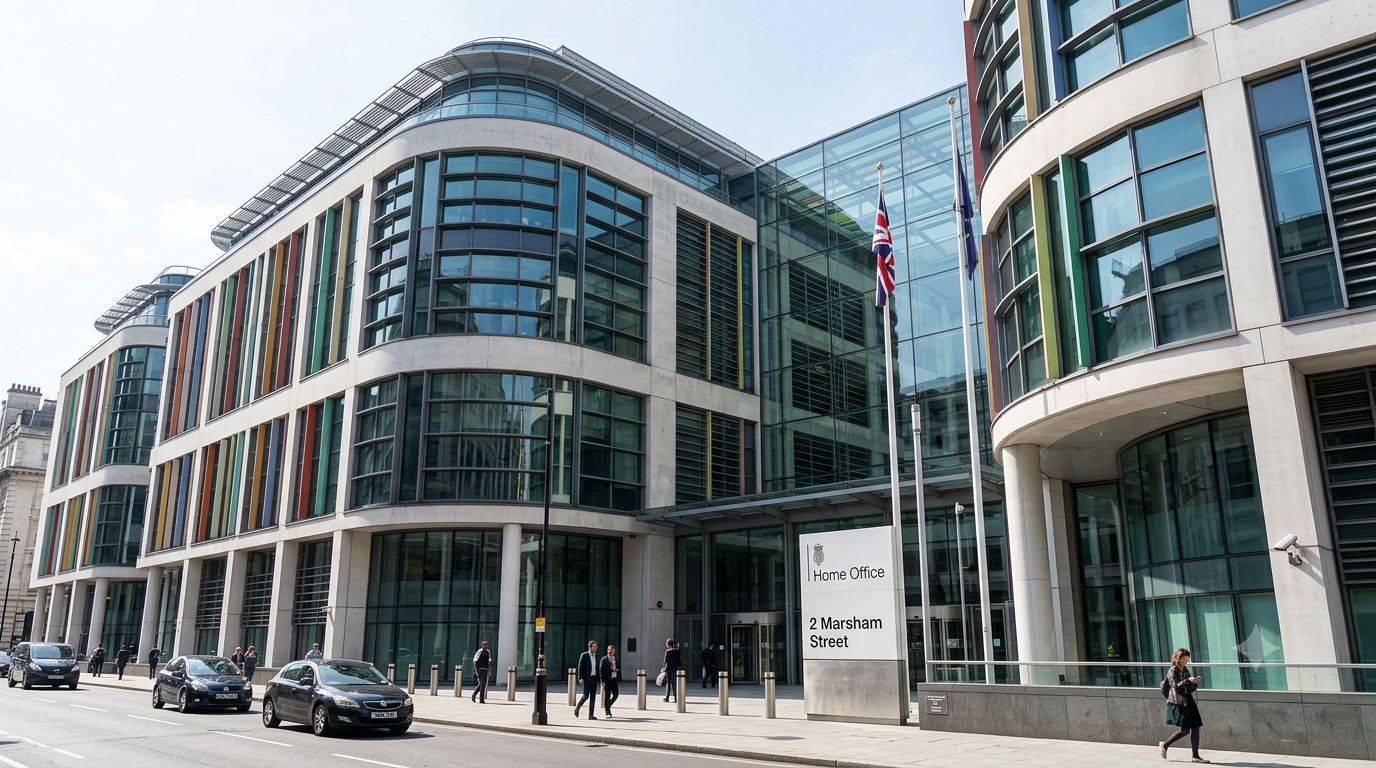
In contrast, the UK’s uncodified constitution and the foundational doctrine of Parliamentary Sovereignty provide no such structural floor. Because an Act of Parliament can alter any law with a simple majority, fundamental civic rights exist in a perpetual state of political vulnerability. Worse still is the modern British executive’s reliance on secondary legislation, Immigration Rules, and ‘Henry VIII clauses.’ The Home Office possesses extraordinary power to alter the mechanics of status, introduce restrictive rules, and set exorbitant fees without substantial parliamentary oversight. For instance, the UK currently charges over £1,200 for a child born in the UK to register for the British citizenship they are legally entitled to—a fee that significantly exceeds administrative costs and serves as a financial barrier for low-income families. The US ruling demonstrates the vital importance of having a robust, judicially enforceable constitutional standard that protects baseline civic identity from the shifting winds of executive populism.

Lesson 2: Preventing the Creeping Crisis of an Unintegrated Underclass

During oral arguments in Trump v. Barbara in April, legal scholars and social advocacy groups presented damning evidence regarding the long-term consequences of restricting birthright citizenship. Expert briefs noted that if Trump’s executive order had been upheld, it would have created a permanent, intergenerational caste of disenfranchised individuals—potentially leaving 250,000 children stateless or structurally excluded every year. Chief Justice Roberts directly responded to this in the majority opinion, warning against the social disintegration that occurs when a state systematically denies the ‘right to have rights’ to children who have known no other home.

The United Kingdom is already living out the reality of this creeping social crisis. By restricting jus soli in 1981, the UK effectively institutionalised a silent underclass of undocumented children. Tens of thousands of children born on British soil, who speak with British accents, attend British schools, and have never left the British Isles, grow up to find themselves legally locked out of their own society. Upon reaching early adulthood, they face sudden and devastating barriers: they are barred from local university tuition rates, denied the right to work legally, restricted from accessing NHS services freely, and subjected to the administrative terrors of the Home Office’s ‘Hostile Environment’ policy.

While the UK provides complex bureaucratic routes for these children to formalise their status—such as registering after 10 years of residence in the country—the process is intentionally convoluted, prohibitively expensive, and frequently mismanaged. The lesson from the US Supreme Court is clear: integrating individuals at the exact moment of birth is a powerful mechanism for social cohesion. By contrast, deferring or withholding that recognition creates a structurally marginalised class, fracturing national identity and placing an immense moral and financial burden on civil society.

Lesson 3: Debunking the Myth of Nationality as an ‘Immigration Magnet’

The primary justification advanced by the US Trump administration—and historically by the architects of the British Nationality Act 1981—is that unconditional birthright citizenship acts as a dangerous ‘pull factor’ or ‘magnet’ for unauthorised migration and ‘birth tourism.’ US Solicitor General John Sauer argued that a globalised world required restricting the policy to maintain the rule of law. However, the Supreme Court’s decision implicitly recognised what decades of empirical data have shown: migration is driven by macro-economic realities, geographic proximity, fleeing violence, and family reunification—not by an intricate cost-benefit analysis of birthright citizenship clauses.

The UK’s forty-year experiment with conditional jus soli serves as definitive proof that restricting citizenship does not suppress unauthorised migration. The abolition of automatic birthright citizenship in 1981 did not prevent irregular channel crossings or visa overstays in the decades that followed. Instead, it merely shifted the burden of immigration enforcement onto the delivery rooms of maternity wards and the administrators of primary schools, requiring regular citizens to police the status of newborns. The US Supreme Court’s refusal to cave to the ‘magnet’ argument should encourage UK policymakers to divorce nationality law from performative border deterrence. Weaponising the legal status of infants is an ineffective tool for immigration control; it fails to stop arrivals while successfully sabotaging the integration of those who are already here.

Conclusion: A Mirror and a Roadmap for British Reform

As the dust settles on today’s historic ruling, the United States has reaffirmed its foundational mythos: that to be born on American soil is to be fundamentally American, regardless of the legal status, wealth, or background of one’s parents. It is a philosophy rooted in civic equality, recognising that children bear no moral culpability for their parents’ migratory decisions.

For a post-Brexit Britain searching for a cohesive identity and struggling under a broken, backlogged immigration system, Trump v. Barbara should serve as an urgent prompt for self-reflection. While a full, immediate return to absolute jus soli may be politically unpalatable in the current climate, there are meaningful, realistic lessons that the UK can implement immediately to repair its fractured framework:

  • Abolish Extravagant Profit-Making Registration Fees: The Home Office must reduce the child citizenship registration fee from over £1,200 to its actual administrative processing cost, ensuring that low-income children born in the UK are not financially barred from their legal rights.
  • Establish a Streamlined, Automatic Right of Registration: Any child born in the UK who completes five consecutive years of primary education or residence in the country should be granted automatic British citizenship upon application, bypassing the tortuous and punitive 10-year path.
  • Introduce Stronger Executive Checks: Parliament should restrict the Home Secretary’s ability to alter foundational nationality and citizenship rules through secondary legislation, ensuring that any changes to who is considered ‘British’ face rigorous, democratic legislative scrutiny.

Ultimately, citizenship is the foundational building block of a functional democracy. Today’s US Supreme Court ruling reminds us that a healthy society is one that actively welcomes its native-born children into the civic fold. By continuing to treat children born on its soil as administrative bargaining chips, the UK does not protect its borders—it merely weakens its own social tissue. It is time for Britain to look across the Atlantic, absorb the profound wisdom of Trump v. Barbara, and remember that citizenship should be a tool of inclusion, not a weapon of exclusion

Filed Under: ARTICLES, Constitutional Law, Featured, Immigration Policy, Legal, UK Tagged With: Birthright Citizenship, Nationality Law

A Promise Kept: The Supreme Court Upholds Birthright Citizenship in Trump v. Barbara

30 June 2026 by GR.News Leave a Comment

Published: June 30, 2026  |  Category: Constitutional Law & Immigration Policy

In a historic 6–3 decision, the High Court rejects executive overreach and firmly solidifies the Fourteenth Amendment’s soil-based citizenship rule.

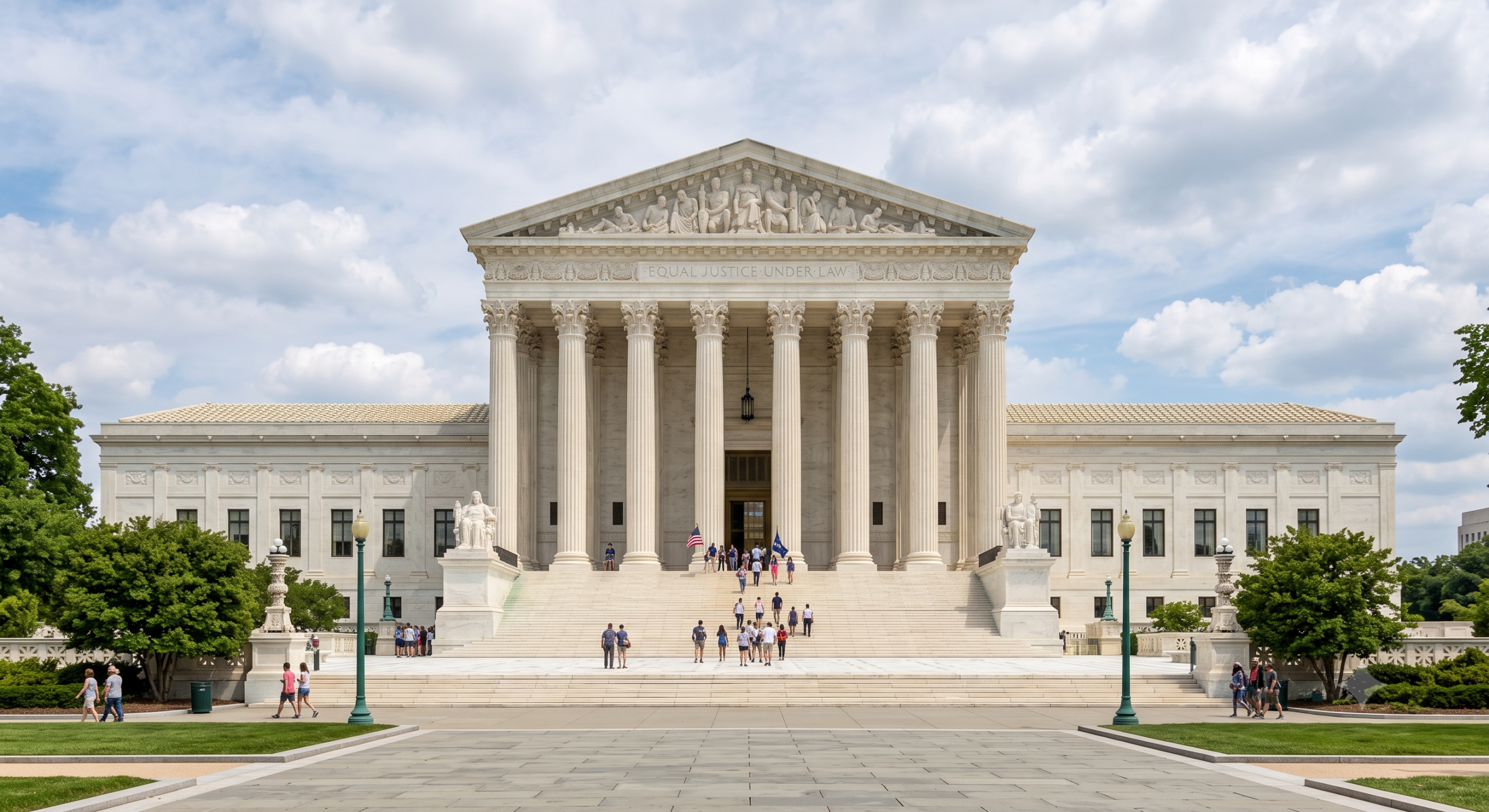
WASHINGTON — In a historic, block-buster ruling delivered on June 30, 2026, the Supreme Court of the United States definitively reaffirmed the foundational principle of American identity: automatic birthright citizenship. In the landmark case of Trump v. Barbara (No. 25-365), a 6–3 majority struck down an executive order that attempted to fundamentally redefine who qualifies as an American citizen at birth. The decision delivers a historic institutional check on executive power, protecting hundreds of thousands of children born on American soil from being cast into legal limbo.

The case centers on Executive Order 14160, signed by President Donald Trump on January 20, 2025. The directive commanded federal agencies to withhold passports, Social Security cards, and certificates of citizenship from children born in the United States unless at least one parent was a U.S. citizen or a lawful permanent resident. By moving to dismantle birthright citizenship via executive fiat, the administration triggered immediate legal challenges from civil rights coalitions, medical groups, and immigrant families. Today, the Supreme Court brought that constitutional experiment to an absolute halt.

The Battle Over the Citizenship Clause

The administration’s legal defense turned entirely on a highly restrictive reading of the Fourteenth Amendment’s Citizenship Clause, which states: “All persons born or naturalized in the United States, and subject to the jurisdiction thereof, are citizens of the United States and of the State wherein they reside.”

The government’s lawyers argued that the phrase “subject to the jurisdiction thereof” implied a requirement of complete political allegiance to the United States. Under this theory, because undocumented immigrants and temporary visa holders (such as international students or guest workers) owe allegiance to foreign sovereigns, their children are not born ‘subject to the jurisdiction’ of the United States in a political sense, and are therefore excluded from automatic citizenship.

Civil rights plaintiffs countered that ‘subject to the jurisdiction’ simply means being subject to the power and laws of the United States—a standard that applies to anyone physically present within the country’s borders, excluding only the narrowest exceptions, such as the children of foreign diplomats or foreign invading armies.

Chief Justice Roberts: Text, History, and the Repudiation of Dred Scott

Writing for the majority, Chief Justice John Roberts dismantled the administration’s legal framework through a rigorous application of textualism and historical context. Roberts rooted the meaning of the Fourteenth Amendment firmly in its post-Civil War origins, noting that the Citizenship Clause was drafted explicitly to obliterate the legacy of the Supreme Court’s infamous 1857 Dred Scott v. Sandford decision, which had denied citizenship to Black Americans based on ancestral bloodlines.

Roberts emphasized that the Framers of the Fourteenth Amendment purposefully chose a territorial standard—jus soli (citizenship by right of the soil)—over an ancestral or lineage-based standard (jus sanguinis). By anchoring citizenship to birth on American soil, the Reconstruction-era Congress sought to create an inclusive, stable political community and prevent the formation of a permanent subordinate caste.

“Citizenship, then and now, was the right to have rights — to freely participate in our political community. The Framers of the Fourteenth Amendment extended that promise to ‘every free-born person in this land.’ We keep that promise today.”

— Chief Justice John Roberts, Majority Opinion


United States v. Wong Kim ArkThe Court also heavily relied on its long-standing 1898 precedent, , which ruled that a child born in San Francisco to Chinese immigrant parents was automatically a U.S. citizen. The majority concluded that the text, history, and structural tradition of American law establish that birth on U.S. soil satisfies the jurisdiction requirement entirely, independent of the parents’ legal status.

An Unlikely Judicial Alliance

The 6–3 alignment revealed a striking consensus cutting across traditional ideological lines. Joining Chief Justice Roberts in the majority were the Court’s three liberal members—Justices Sonia Sotomayor, Elena Kagan, and Ketanji Brown Jackson—alongside two conservative Trump appointees, Justices Brett Kavanaugh and Amy Coney Barrett.

The legal mechanics of the decision contained an intricate procedural twist. The majority ruled that Executive Order 14160 violated both the U.S. Constitution and federal statutory law. Specifically, Congress explicitly coded the birthright citizenship principle into federal law via the Immigration and Nationality Act (INA), utilizing the exact phrasing of the Fourteenth Amendment.

Justice Kavanaugh wrote a separate concurring opinion. While he joined the 6–3 majority in striking down the order on statutory grounds—affirming that a president cannot override explicit congressional text by executive fiat—he indicated in a separate dissent-in-part that he would have sided with the administration on a pure, narrow constitutional interpretation if federal law had been silent. This subtle legal maneuvering resulted in a tight 5–4 split on the absolute constitutional boundary, but an unyielding 6–3 consensus to invalidate the executive order.

The Dissents

Justices Clarence Thomas, Neil Gorsuch, and Samuel Alito filed forceful dissents. Led by Justice Thomas, the dissenting justices argued that the original public meaning of ‘subject to the jurisdiction’ in 1868 demanded an exclusive, undivided political allegiance to the United States. Thomas claimed that the majority’s interpretation was overly broad and that the Constitution leaves the authority to regulate or define the citizenship status of children of temporary or unlawful residents to the legislative and executive branches.

Societal and Economic Repercussions

The stakes of today’s ruling could not have been higher. Had the executive order been validated, it would have instantly created a rapidly growing population of stateless or non-citizen children born inside the United States. Economic and social amicus briefs submitted by corporate coalitions and public policy institutes had warned the justices that such a policy would trigger severe structural instability—disrupting workforce talent pools, reducing long-term tax bases, and overwhelming local social infrastructure.

The decision brings definitive legal certainty and profound relief to immigrant communities, international scholars, high-tech guest workers (holding H-1B visas), and mixed-status families. It ensures that the children of individuals legally or temporarily residing in the country can continue to contribute to the nation’s civic and economic fabric without fear of sudden denationalization.

Conclusion: Defining the American Experiment

Ultimately, Trump v. Barbara stands as one of the most critical constitutional checkpoints of the 21st century. It establishes a definitive boundary on executive overreach, reinforcing that not even the highest office in the land can rewrite the terms of citizenship by decree.

By preserving the principle of soil-based citizenship, the Supreme Court ensured that the United States remains a nation where citizenship is defined not by ancestral bloodlines or parentage, but by the shared soil upon which an individual’s journey begins. The promise of the Fourteenth Amendment remains fully intact.

Filed Under: America, Constitutional Law, Featured, Immigration Policy, Legal, News Stories, Politics, The US Supreme Court Tagged With: Birthright Citizenship, Fourteenth Amendment, Trump v. Barbara

The Strait of Hormuz: How a 33-Kilometre Chokepoint Brought the World to the Brink

30 June 2026 by GR.News Leave a Comment

The 2026 Iran war transformed the world’s most critical maritime corridor into a geopolitical battleground — and as diplomats meet in Doha, its future remains dangerously uncertain.

It is barely 33 kilometres wide at its narrowest point. The stretch of water between the rocky Iranian coastline and the Omani peninsula of Musandam would take a modern supertanker approximately one hour to transit. It has no cities on its shores, no monuments, no famous beaches. For most of human history, it was known mainly to Gulf sailors and cartographers.

Yet for four months in 2026, this sliver of sea between the Persian Gulf and the Gulf of Oman became the single most consequential piece of real estate on Earth — and as diplomats scramble in Doha today, its fate still hangs in the balance.

The Strait of Hormuz is not just a shipping lane. It is the jugular vein of the global energy system.

Until the war’s start, about 25 percent of the world’s seaborne oil trade and 20 percent of the world’s liquefied natural gas passed through the strait.

When it closes — even partially, even temporarily — the shock travels almost instantly through fuel prices in Tokyo, heating bills in Berlin, food costs in Lagos, and commuter petrol bills in São Paulo.

In 2026, it didn’t close partially. It was mined, fought over, blockaded simultaneously from both sides, and transformed into the central bargaining chip in an extraordinary confrontation between two states backed by nuclear capacity and the most powerful military on Earth.


How the War Began

The confrontation took place after years of rising tension over Iran’s nuclear programme, its ballistic missiles, and its military reach across the Middle East. Attempts to renegotiate a nuclear deal after the collapse of the Joint Comprehensive Plan of Action had repeatedly failed.

On February 28, 2026, the United States and Israel launched coordinated airstrikes against Iran — codenamed Operation Epic Fury by Washington and Operation Roaring Lion by Jerusalem. The strikes killed Iran’s Supreme Leader and triggered an immediate and devastating Iranian response.

In retaliation, the Iranian Revolutionary Guard Corps (IRGC) issued warnings forbidding passage through the strait, boarded and attacked merchant ships, and laid sea mines in the waterway.

Major container shipping companies, including Maersk, CMA CGM, and Hapag-Lloyd, immediately suspended transits through the strait and related routes such as the Red Sea.

Within days, tanker traffic had dropped to almost nothing. Oil prices surged. Supply chains buckled. Airlines cancelled flights across the Middle East. And the world woke up to just how much of its prosperity depended on the safe passage of liquid fuel through a single geographical bottleneck.

The Scale of the Catastrophe

The largest-ever monthly increase in oil prices occurred in March 2026. The closure of the strait became the largest disruption to world energy supply since the 1970s energy crisis, as well as the largest in the history of the world oil market. Other commodity markets to suffer supply disruption and price increases due to the crisis included aluminium, fertiliser, and helium.

The International Maritime Organization reported that approximately 20,000 mariners and 2,000 ships were stranded in the Persian Gulf at the height of the crisis, unable to move in either direction without risking attack. From Manila to Mumbai, from Rotterdam to Houston, the knock-on effects were severe. Fertiliser shortages triggered urgent warnings from the UN Food and Agriculture Organization about the potential impact on global harvests — a reminder that food security in the 21st century is intimately connected to Persian Gulf geopolitics.

The war’s economic impact includes the largest-ever supply disruption of the global oil market, disruptions to the natural gas, fertiliser, aviation, and tourism industries, as well as volatility in financial markets. On June 21, the cost of the war to the US military was estimated at $40 billion, with Trump requesting a further $87 billion, the majority of which is tied to the war. By March 31, the cost to Arab countries was estimated at $120 billion.

Iran’s government assessed the damage to its own economy as possibly $1 trillion by April 11 — a staggering figure that underscores the mutual destructiveness of the conflict.

The Dual Blockade

What made the 2026 Hormuz crisis unlike any previous confrontation was that — at its height — two opposing naval forces were simultaneously blockading each other and the rest of the world’s shipping.

Iran had closed the strait to hostile traffic and was firing on vessels.

From April 13 to May 29, the US simultaneously blockaded Iranian ports, in a situation described by The Guardian as a “dual blockade” — with the US Navy blockading Iran and Iran blockading the Gulf.

In May 2026, the Islamic Revolutionary Guard Corps Navy announced that Iran had redefined the Strait of Hormuz into what officials described as a “vast operational area.” According to IRGC official Mohammad Akbarzadeh, the strait was no longer viewed as the narrow maritime corridor surrounding the islands of Hormuz and Hengam, but as a broader strategic zone extending from the Iranian port city of Jask to Siri Island.

This assertion — that Iran controlled not just the narrow transit lanes but a vast swathe of the Persian Gulf approach — fundamentally alarmed the international community.

Iranian attacks also targeted oil infrastructure in the region — including vessels in the Strait of Hormuz — as well as commercial hubs in neighbouring countries that aid the US military. By late March, officials in the IRGC suggested Iran might push its Houthi allies in Yemen to block Bab el-Mandeb Strait to disrupt shipping in the Red Sea and further strain global markets.

The Ceasefire and Its Fragility

The road to any kind of diplomatic resolution was tortuous.

On April 8, the United States and Iran agreed to a two-week ceasefire, mediated by Pakistan. Since its declaration, the ceasefire has been violated by both sides numerous times. On April 21, President Trump extended the ceasefire indefinitely.

But the underlying tensions refused to resolve. Lebanon was the knot that could not be untied. The memorandum of understanding that Trump and Iran’s President Masoud Pezeshkian signed at Versailles Palace on June 17 — the “Islamabad MOU” — called explicitly for an end to hostilities on all fronts, including Lebanon.

Iran has insisted that fighting stop in Lebanon as part of any broader deal with the United States. Israel has said it is not bound by the US-Iran ceasefire agreement.

Every Israeli airstrike on southern Beirut after June 17 therefore risked fracturing the entire diplomatic architecture.

Israel continued strikes in southern Lebanon after the MOU was signed, and Iran said that it closed the strait again the following day, citing Israeli actions as a violation of the agreement — a claim denied by the US military.

An adviser to Iran’s Supreme Leader Mojtaba Khamenei stated bluntly: “The Americans understand the language of economics and cost-benefit better than anything else. As long as the agreement remains only on paper, energy flows in the Middle East will also remain halted.”

The International Response

The world did not sit idle.

The UK and France have hosted two conferences on reopening the Strait of Hormuz, with a focus on exploring potential sanctions, diplomatic initiatives, and insurance provision for ships. They have signed a statement, alongside 36 other countries, expressing their readiness to contribute to efforts to ensure safe passage and condemning attacks on commercial shipping.

France and the UK said they would establish an international defensive mission for the strait, once a sustainable ceasefire has been agreed. The UK said it would commit autonomous mine-hunting equipment, counter-drone systems, Typhoon jets, HMS Dragon, and potentially RFA Lyme Bay to the defensive mission, once it is operational. HMS Dragon has been sent to the region, as has France’s Charles de Gaulle aircraft carrier group.

At the UN Security Council, China and Russia vetoed a draft resolution on the Strait of Hormuz — a stark illustration of how the conflict has reinforced existing great-power fault lines and complicated any multilateral response.

Where We Are Now

As of June 28, a US official confirmed: “Technical talks are slated to continue on all areas of the memorandum of understanding. Both sides will stand down for now and vessels can move freely through the strait. We decided to stop all the kinetic activity.”

The average price of one gallon of gasoline in the US has dropped to $3.86, down from a peak of $4.56 in May — but still significantly above the pre-war level of less than $3.

Oil markets have priced in cautious hope. Global shipping has very partially resumed. But the vast majority of commercial tanker operators remain deeply reluctant to transit a strait where Iranian mines have not been fully cleared and where the rules of passage remain contested.

Japan’s Prime Minister Sanae Takaichi said it was vital that “free and safe navigation” in the Strait of Hormuz be promptly restored through the “steady implementation of the memorandum by all parties.”

For energy-import-dependent nations across Asia — Japan, South Korea, India, China — this is not a diplomatic abstraction. It is a question of national survival.

The Lesson of 2026

The Strait of Hormuz crisis has exposed a fundamental vulnerability at the heart of the globalised economy: the world’s energy system has a single point of failure, and a mid-sized regional power holds a key to it. For decades, military analysts and energy economists warned that a determined Iranian government could hold the global economy hostage by threatening or closing the strait. In 2026, that warning became reality.

What the crisis has also revealed is the extraordinary difficulty of compelling compliance in a conflict where one side controls a chokepoint more powerful than any army. Unprecedented economic pressure, the threat of regime destruction, a naval blockade, and months of airstrikes all failed to reopen the strait on terms acceptable to the international community. Only painstaking Pakistani-Qatari mediation, and the MOU’s grudging compromise on frozen assets and sanctions relief, brought the situation to its current precarious equilibrium.

As negotiators converge on Doha today — or try to — the 60-day clock on the MOU continues to tick. The thorniest issues remain: the final architecture of Iran’s nuclear programme, the terms of sanctions relief, the fate of Lebanon, and the enduring question of who controls the 33-kilometre strait that the world cannot live without.

The answer to that question will define not just the future of the Middle East, but the future of the global economy for decades to come.

Filed Under: ARTICLES, Economy, Featured, Global, International Relations, Middle East, News Stories, Politics Tagged With: 2026 Iran war, ceasefire, energy crisis, geopolitics, global economy, Iran, memorandum of understanding, oil prices, Strait of Hormuz, United States

Iran Denies Trump’s Doha Meeting Claim as US Envoys Head to Qatar Amid Ongoing War

30 June 2026 by GR.News Leave a Comment

Washington and Tehran issue contradictory statements on diplomacy even as military skirmishes continue over the Strait of Hormuz.

DOHA / TEHRAN, June 30, 2026 — A fresh diplomatic contradiction between Washington and Tehran deepened the uncertainty hanging over the fragile ceasefire in the US-Israel war on Iran on Monday, as President Donald Trump announced an imminent meeting with Iranian representatives in Qatar while Iran’s Foreign Ministry flatly denied that any such talks were planned.

“IRAN HAS REQUESTED A MEETING. IT WILL TAKE PLACE TOMORROW IN DOHA!” Trump declared in a characteristically capitalised post on his Truth Social platform late Sunday, catching Tehran — and much of the watching world — off guard.

Trump’s announcement came less than two hours after a top Iranian official said that technical talks over the memorandum of understanding (MoU) between Washington and Tehran “are not planned” for this week.

Iranian Deputy Foreign Minister Kazem Gharibabadi said any meeting would take place only after conditions were met, without providing details. “Although consultations with Qatar, including regarding the follow-up of the implementation of the other party’s commitments, are ongoing as usual, the news from some media outlets that technical talks of the working groups will be held in Doha cannot be confirmed,” Gharibabadi told Iran’s Tasnim news agency.

Despite the public contradiction, US envoys were nonetheless reported to be on their way.

White House spokeswoman Karoline Leavitt said special envoy Steve Witkoff and Trump’s son-in-law Jared Kushner would lead the US negotiating team in Doha. “Special Envoy Witkoff and Jared Kushner will be flying to Doha for high-level meetings this week as we continue to discuss the memorandum of understanding,” she told Fox News.

Breaking news from Al Jazeera on Monday confirmed that US envoys were indeed en route to Doha for what Trump described as “perhaps important” Iran talks — even as Tehran maintained there was nothing formally scheduled.

A War That Shook the World

The confrontation took place after years of rising tension over Iran’s nuclear programme, its ballistic missiles, and its military reach across the Middle East.

On February 28, 2026, the United States and Israel launched a coordinated air war against Iran — codenamed Operation Epic Fury by Washington. Iran’s retaliatory response was immediate and devastating to global trade: the IRGC declared the Strait of Hormuz closed to hostile shipping and began attacking vessels attempting to transit it.

Shipping traffic through the Strait of Hormuz — a major maritime chokepoint for world energy trade — had been largely blocked by Iran since February 28. In retaliation, the Iranian Revolutionary Guard Corps (IRGC) issued warnings forbidding passage through the strait, boarded and attacked merchant ships, and laid sea mines in the waterway. Until the war’s start, about 25 percent of the world’s seaborne oil trade and 20 percent of the world’s liquefied natural gas passed through the strait.

The closure of the strait became the largest disruption to world energy supply since the 1970s energy crisis, as well as the largest in the history of the world oil market. Other commodity markets to suffer supply disruption and price increases due to the crisis included aluminium, fertiliser, and helium.

The war’s economic impact includes the largest-ever supply disruption of the global oil market, disruptions to the natural gas, fertiliser, aviation, and tourism industries, as well as volatility in financial markets. On June 21, the cost of the war to the US military was estimated at $40 billion, with Trump requesting a further $87 billion, the majority of which is tied to the war.

The Memorandum of Understanding

After weeks of mediation led by Pakistan and Qatar, a breakthrough came on June 17.

US President Donald Trump and Iran’s President Masoud Pezeshkian electronically signed a memorandum of understanding to extend a ceasefire in the US-Iran war. US officials said the agreement includes Iran reaffirming a commitment to not develop a nuclear weapon, an end to the war on all fronts, and the reopening of the Strait of Hormuz. The agreement extends the ceasefire for 60 days, paving the way for further negotiations over Iran’s nuclear programme, US sanctions on Tehran, and the release of frozen assets.

But the ink was barely dry before the deal came under strain.

On June 28, Iran said that it launched ballistic missiles and drones at the US Ali Al Salem Air Base in Kuwait and the US Fifth Fleet headquarters in Bahrain, as retaliation to American attacks on five Iranian coastal sites. On the same day, Iranian state television announced that coordination with Iran is still necessary for passage through the Strait of Hormuz.

A US official confirmed to RFE/RL late on June 28: “Technical talks are slated to continue on all areas of the memorandum of understanding. Both sides will stand down for now and vessels can move freely through the strait.” Axios, also citing a US official, reported the two sides plan to meet on June 30 in Doha.

The Lebanon Knot

At the heart of the deadlock lies Lebanon.

The first sentence of the 14-point MoU calls for a full ceasefire in Lebanon, “ensuring the territorial integrity and sovereignty” of the country. But the US has sponsored a separate agreement between the Lebanese government and Israel that conditions Israeli withdrawal on the disarmament of Hezbollah across the country.

Iran has insisted that fighting stop in Lebanon as part of any broader deal with the United States. Israel has said it is not bound by the US-Iran ceasefire agreement.

Tehran has used the Strait of Hormuz — its most potent economic weapon — as leverage to force compliance on this point. Every Israeli airstrike in southern Beirut has risked triggering a new closure of the strait and a fresh spike in global oil prices.

On Monday, diplomatic signals were marginally more hopeful. The UAE lifted its Lebanon travel ban, a quiet but notable sign that regional confidence in the ceasefire architecture was growing. Qatar’s and Iran’s defence ministers also met to “review security developments,” suggesting that back-channel diplomacy was accelerating even as public statements remained contradictory.

France Plans Hormuz Mission — Iran Pushes Back

Into the diplomatic vacuum have stepped European powers.

France and the UK have hosted two conferences on reopening the Strait of Hormuz. On April 17, France and the UK said they would establish an international defensive mission for the strait, once a sustainable ceasefire has been agreed. The UK said it would commit autonomous mine-hunting equipment, counter-drone systems, Typhoon jets, HMS Dragon, and potentially RFA Lyme Bay to the defensive mission. France’s Charles de Gaulle aircraft carrier group has also been dispatched to the region. Iran has criticised the planned deployments, saying it will deliver “a decisive and immediate response” if they are sent to the strait.

The Price of Peace

Trump hailed the drop in oil prices that followed the deal, which lifted Tehran’s blockade on Hormuz and eased US sanctions on Iran’s energy products. The average price of one gallon of gasoline in the US has dropped to $3.86, down from a peak of $4.56 in May — though still significantly above the pre-war level of less than $3.

“GAS PRICES COMING DOWN, FAST! REPORT ANY ABUSES AT RETAIL LEVEL,” Trump wrote in a separate post on Monday, applying political pressure on domestic retailers while the broader diplomatic situation remains acutely fragile.

With US envoys reportedly in the air towards Doha and Iran simultaneously denying yet hinting at the possibility of dialogue, the world watches one of the most volatile diplomatic tightropes in modern history play out in real time. The next 24 hours may determine whether the 60-day MOU window survives — or collapses into a renewed round of strikes that the global economy can ill afford.

Filed Under: America, Asia, Economy, Featured, Global, News Stories Tagged With: ceasefire, Doha, Donald Trump, Iran, memorandum of understanding, Middle East war, nuclear deal, oil prices, Strait of Hormuz, United States

Paraguay and Morocco Stun Germany and Netherlands in a Historic World Cup Night of Upsets

30 June 2026 by GR.News Leave a Comment

Two penalty-shootout shocks in a single evening rewrite the World Cup 2026 script, as South America and Africa triumph over European titans.

FOXBOROUGH / MONTERREY, June 29–30, 2026 — In a single extraordinary evening of World Cup football, two of the tournament’s historic giants were eliminated by underdogs from Paraguay and Morocco, producing what commentators and football historians are already calling the most stunning 24 hours the competition has ever witnessed.

Germany’s World Cup 2026 campaign ended in a shock defeat — arguably the competition’s greatest — by Paraguay in the round of 32.

Hours later, in Monterrey, Mexico,

Morocco beat the Netherlands 3-2 in a penalty shootout, knocking the Dutch out of the 2026 World Cup in the round of 32.

Two European giants — four-time World Cup winners Germany and perennial contenders the Netherlands — were sent home on the same night by nations ranked 41st and well outside the pre-tournament favourites list. The football world is still processing it.

Paraguay: The Miracle of Foxborough

At Gillette Stadium in Foxborough, Massachusetts, few neutrals had given Paraguay much hope against Germany.

Germany were ranked tenth in the world by FIFA entering the tournament, while Paraguay were ranked 41st.

Yet from the moment Julio Enciso rose to meet a cross with a composed 42nd-minute header, a shift in footballing gravity became unmistakably apparent.

The Germans trailed 1-0 at half-time to Enciso’s header. It was a limp display by the four-time winners in the first period, but they drew level in the second half when Kai Havertz scored eight minutes after the restart. Germany had a goal thereafter from a corner ruled out after a VAR review for a foul on Paraguay’s keeper, but with no further goal added, the game went to spot kicks after extra time.

Havertz, who helped Arsenal end a 22-year wait to win the English Premier League title this season, missed the opening kick of the shootout. His side would miss three kicks in total as Paraguay, who themselves missed two, eventually prevailed 4-3.

Paraguay coach Gustavo Alfaro, the Argentine tactician, emerged from the technical area with tears streaming down his face. His players formed a scrum of red-and-white near the centre circle as the German squad stood motionless, staring at the turf in stunned silence. For Alfaro, who has long preached that organisation and belief can outfox talent, Monday night in Foxborough was the ultimate validation.

The defeat is potentially the greatest upset in World Cup football, and is surely the biggest at the knockout stage. The previous match it surpasses was another German defeat — at USA 1994, when a Hristo Stoichkov-inspired Bulgaria knocked out the defending champions in the quarterfinals. Stoichkov was then a Barcelona player and named Ballon d’Or winner for 1994, while Bulgaria were ranked 29th in the world at the time.

It was Germany’s first defeat on penalties at a World Cup, and they have now failed to reach the last 16 since they last won the competition in 2010.

For a football nation that has lifted the trophy four times and reached as recently as the 2014 final in Rio de Janeiro, this elimination — against a 41st-ranked nation on the American continent — represents an existential crisis for German football.

Morocco: Africa’s Glory Continues

Some 2,400 kilometres away in Monterrey, Mexico, Morocco were writing another chapter in African football history.

After a stoppage-time goal by Morocco’s Issa Diop cancelled out Cody Gakpo’s opener for the Netherlands, the teams were forced into extra time, followed by a dramatic shootout. Following a series of saves and misses, star striker Ismael Saibari scored the winning spot-kick for Morocco, who will now face Canada in the round of 16.

Gakpo — one of the most devastating forwards in world football following his Champions League exploits with Liverpool — had given the Netherlands what appeared to be a commanding platform when he converted a first-half chance with characteristic composure. Morocco, marshalled by a disciplined defensive structure and driven by the electric Azzedine Ounahi in midfield, refused to buckle.

Diop’s last-gasp equaliser — a thunderous header from a corner in the final minute of stoppage time — sent the Moroccan end of the Estadio BBVA into rapture and visibly deflated an Dutch side that had assumed the match was won. In the shootout, Morocco’s goalkeeper Munir held his nerve superbly while Saibari strode up to convert the decisive kick, arms immediately raised to the sky before dropping to his knees in prayer as teammates rushed from every direction onto the pitch.

Africa and the Americas: The New World Order of Football

The twin eliminations of Germany and the Netherlands — both ranked among the pre-tournament favourites — represent a seismic realignment in global football’s power balance. Morocco’s advance echoes and builds upon their extraordinary run at the Qatar 2022 World Cup, when they became the first African nation in history to reach a semi-final. Their fans, draped in the green-star-red flags of the Kingdom, have transformed every host venue into something approaching a home stadium.

Paraguay’s triumph carries immense emotional weight in a country where football is inseparable from national identity. The country last reached the quarterfinals at South Africa 2010 — this result in front of a partisan North American crowd arguably surpasses even that achievement, given the magnitude of the opponent eliminated.

Both results ensure that when football history remembers the 2026 World Cup — a tournament already notable for its expanded 48-team format and its three-nation North American hosting — it will also recall June 29 as the night the old European order crumbled under South American steel and African heart.

Filed Under: Football, Global, News Stories, Sports Tagged With: FIFA World Cup 2026, football upsets, Foxborough, Germany, Ismael Saibari, Julio Enciso, Monterrey, Morocco, Netherlands, Paraguay, penalty shootout

  • Page 1
  • Page 2
  • Go to Next Page »

Primary Sidebar

The leader of the UK Labour Party Kier Starmer in Campain flyers

  Is this the day Kier has been waiting for? Kier Starmer’s Labour has won a historic victory in yesterday’s general election. In the last count on the morning of Friday, July 5, the party has won 409 seats. A total of 326 seats are needed to form a government, meaning that the party has […]

  Officials of Ukraine’s intelligence services, the SUB, have told the AP that Kyiv was behind the killing of a Russian general and an assistant. Lt. Gen Igor Kirillov and his assistant were both killed in an explosion planted in a scooter by his residence in Moscow. The blast was detonated using a remote device. […]

  The Fall of LIBOR Manipulation: Supreme Court Quashes Convictions of Hayes and Palombo In a landmark decision, the UK Supreme Court has overturned the convictions of Tom Hayes and Carlo Palombo, two former traders accused of conspiring to manipulate benchmark interest rates, LIBOR and EURIBOR. The judgment, delivered on July 23, 2025, highlights critical […]

Two penalty-shootout shocks in a single evening rewrite the World Cup 2026 script, as South America and Africa triumph over European titans. FOXBOROUGH / MONTERREY, June 29–30, 2026 — In a single extraordinary evening of World Cup football, two of the tournament’s historic giants were eliminated by underdogs from Paraguay and Morocco, producing what commentators […]

Recent Stories

  • Venezuela’s Earthquake Catastrophe Deepens: Over 2,000 Dead, Tens of Thousands Still Missing One Week On
  • THE AGENTIC AGE: ANTHROPIC UNVEILS CLAUDE SONNET 5 AS US GOVERNMENT LIFTS RESTRICTIONS ON FRONTIER MODEL FABLE 5
  • Ireland Takes the EU Helm: An Island Nation’s Moment to Shape a Fractured Continent
  • Pakistan Strikes Afghan Villages, Killing 36 Civilians — Taliban Vows Retaliation
  • Venezuela’s Death Toll Surpasses 1,900 as Rescue Window Closes and Aid Pours In

Copyright © 2026 · TKJ Global Media Ltd · Log in